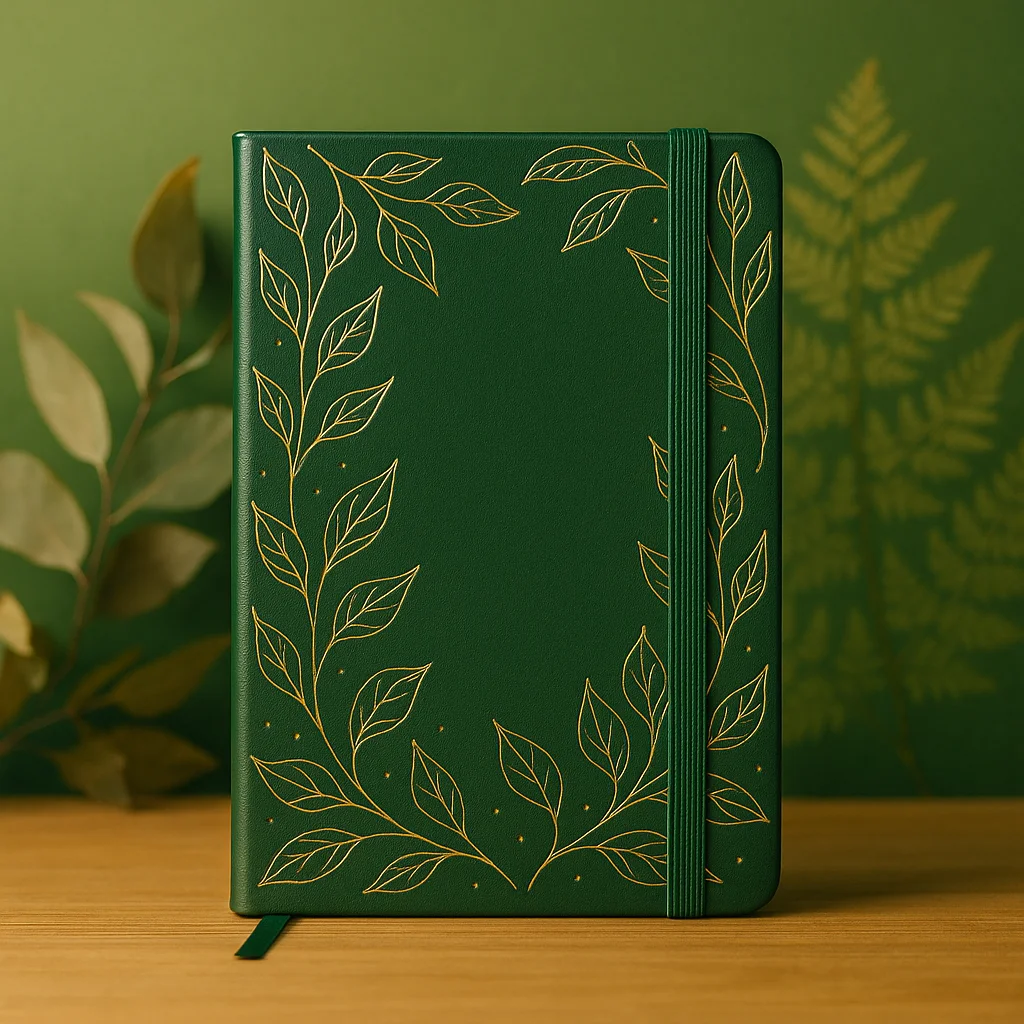
The best paper for notebooks is not necessarily the thickest paper. For writing with pens 80–100 GSM wood-pulp paper or offset printed paper is a good starting point. For premium journals 100–120 GSM paper is used. Sketchbooks and mixed media journals and books need heavier weight specialty paper depending on the tools and weight of the pages as well as the binding and overall feel of the book.
For buyers who need paper, cover, binding, and packaging developed together, Labon offers standard and custom notebook production. The company has more than 20 years of manufacturing experience and checks materials and finished goods throughout production.
What Paper Is Best for Most Notebooks?
There is no single paper for every notebook. Start with the writing tool, then set the GSM, surface, colour, and page count.
Everyday Writing Paper
80–100 GSM is a reasonable balance of cost, opacity and weight for office notes, school notebooks and promotional notebooks. It will take ballpoint pen and pencil well. Wet gel ink, however, may show through very thin sheets.
An 80 GSM stock keeps the book light. A 90 or 100 GSM stock feels firmer and often gives better two-sided use.
Premium Journal Paper
We find that premium journals are generally written with using 100-120 GSM paper. Such paper is heavier and offers a greater tactile feel to writing. The paper also does less ghosting when using rollerballs, gel pens, and very fine fountain pens.
Ivory paper gives a softer reading surface. Bright white paper works well for clean corporate layouts and colour printing.
Art and Mixed-Media Paper
Some art journals are designed to be used with a specific medium. So, sketchbooks, marker books and watercolor journals need special paper for the medium they were designed to be used with. While weight is important, surface tooth, sizing, wet strength and fibre structure all play a large role in the paper too.
Pencil paper needs texture to hold graphite. Marker paper needs controlled absorption. Watercolor paper must handle moisture without severe buckling. In these products, 160 GSM or more may be suitable.
Paper Types for Different Notebook Uses
Once the GSM range is clear, compare paper families by feel, print result, cost, and thickness.
Wood-Pulp and Offset Paper
Wood-pulp paper is practical for many notebooks. It comes in different weights, colours, opacity levels, and finishes. Offset paper is uncoated and usually accepts handwriting well.
This blend is suited for meeting notebooks, planners, school books, daily journals, and branded stationery. Too much absorbency can cause feathering.
Cotton and Watercolor Paper
Cotton paper gives a richer texture and can support premium journals, commemorative books, and creative stationery.
Watercolor paper must tolerate water, brush contact, and drying. Check buckling, colour response, surface lifting, and binding strength after wet use.
Coated and Stone Paper
Coated paper is useful when inner pages contain photographs, colour graphics, charts, or branded inserts. It can improve print sharpness, but some pens may dry slowly.
The stone paper feels smooth and is probably to repel moisture but still needs to be tested for issues such as ink drying, folding, printing and disposal.
GSM, Texture, and Ink Performance
Paper weight gets attention during sourcing, yet it is only one part of the result. The production process also lets buyers choose notebook size, inner-page format, cover material, decoration, and accessories.
Paper Weight and Real Performance
GSM means grams per square metre. It tells you the mass of the sheet, not its full quality. Two papers with the same GSM can have different thickness, density, smoothness, and ink resistance.
A well-sized 90 GSM paper may control ink better than a poorly finished 120 GSM paper. Ask for the full specification and a physical sample.
Surface Sizing and Opacity
Sizing controls how quickly ink enters the sheet. Fast absorption can cause feathering. Slow absorption can increase smudging.
Opacity affects how much writing can be seen from the back. Good opacity helps two-sided writing even when the sheet is not very heavy.
Page Count and Binding Impact
Heavier paper increases spine width and shipping weight. It may force you to reduce the sheet count, change the cover size, or choose stronger binding.
The weight of a paper block from an A5 notebook with 80 sheets is approximately 199 grams when made from 80GSM paper, 249 grams when made from 100GSM paper and 298 grams when made from 120GSM paper.
Practical Paper Testing Before Bulk Production
A loose sheet helps with early screening, but the final decision should come from a finished notebook sample.
Pen and Marker Tests
Use likely writing tools: pencil, ballpoint, gel pen, fountain pen, highlighter, brush pen, and marker.
Write on both sides, draw solid blocks, and leave wet lines to dry. This shows more than a paper swatch or GSM label.
Bleed-Through and Ghosting Checks
Bleed-through means ink passes through the page. Ghosting is the visible shadow on the reverse. Feathering happens when ink spreads along the fibres.
Also check drying time, smudging, erasing damage, paper curl, surface scratching, and colour consistency.
Finished Sample Approval
Approve a bound sample with the actual paper, page count, ruling, print, cover, and accessories. Folding and grain direction can change page turning. Sewing and glue can affect opening.
Record the approved GSM, paper colour, layout, finished size, binding, logo method, and packaging.
“Verdant Whispers” Premium Journal as a Product Reference
A real notebook makes paper decisions easier to judge. The “Verdant Whispers” Premium Journal shows how paper, page layout, cover material, and accessories can support one clear use case.
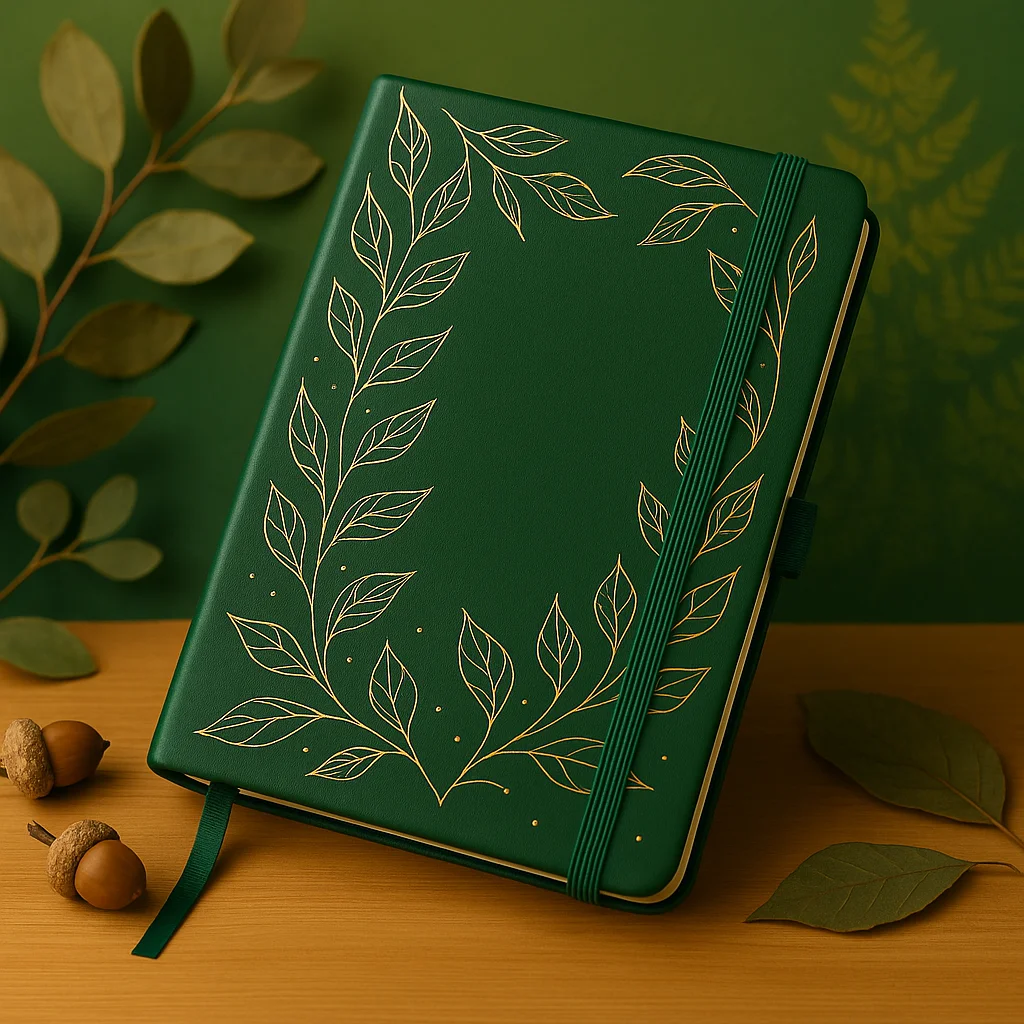
Thick Ivory Inner Pages
The product uses high-quality thick ivory paper designed for fountain pens, ballpoint pens, and markers with minimal bleed-through. The official page does not publish a GSM, so treat it as a performance reference rather than assume a weight.
Its mix of blank and lightly guided pages supports journaling, planning, sketching, and creative writing.
A5 Format and Mixed Layouts
The journal is approximately A5, or 14.8 × 21 cm. It uses a green vegan-leather cover, gold-foil botanical detail, an elastic closure, a satin ribbon, and rounded corners.
Define the user first, then select paper, page format, cover, and accessories.
Customization for Retail and Gifting
The wider product portfolio includes journals, hardcover notebooks, gift sets, planners, and accessories.
For corporate milestones, museum shops, and souvenir programs, paper choice can also be matched with gift set solutions. A thicker journal may need a fitted box, while a lighter notebook can sit beside a pen or card.
Build Your Custom Notebook with Labon
Paper selection becomes easier when the factory reviews the complete product.
Factory Support and Quality Control
You can review the company’s background on the about Labon page. Its process covers material selection, customization, and checks from raw materials to finished goods.
Send the intended pen type, GSM range, paper colour, page count, size, binding, cover material, logo method, quantity, and destination market.
Product and Gift Set Options
A retail journal may use ivory paper, mixed page layouts, hardcover binding, foil, an elastic band, and a ribbon. School books may need lighter paper, while art products put surface first.
The best result is the one that matches the user and stays stable in repeat production.
Sample Request and Project Brief
Before a bulk order, contact the team and ask for a finished sample made with the proposed paper and structure.
Ask the supplier to confirm the paper name, GSM, colour, coating or sizing, page count, tolerance, lead time, packing method, and quality standard in writing.
Conclusion
Final Buying Rule
For most notebooks, 80–100 GSM quality wood-pulp or offset paper is the practical starting point. Premium journals often work well at 100–120 GSM. Art books need heavier specialty paper chosen for the medium.
The final decision should come from pen tests and a finished bound sample. Texture, sizing, opacity, binding, and page count decide whether the notebook feels right.
Procurement Checklist
Confirm the writing tools, paper family, GSM, colour, page layout, sheet count, binding, finished size, cover, accessories, packaging, and shipping target. Keep the approved sample and specification together.
FAQ
Q1: Is 80 GSM Paper Good for Notebooks?
A1: Yes, quality 80 GSM paper works well for pencils, ballpoint pens, school notes, office use, and cost-sensitive promotional notebooks.
Q2: Is 100 GSM Paper Good for Fountain Pens?
A2: It can be, but fibre quality, sizing, nib width, ink flow, and drying time must still be tested.
Q3: What Paper Is Best for Bullet Journals?
A3: A 120–160 GSM paper is a useful starting range when you use brush pens, fountain pens, or light markers.
Q4: What Paper Is Best for Sketchbooks?
A4: Sketchbooks often need 160 GSM or heavier paper, but the right texture depends on graphite, charcoal, ink, marker, pastel, or watercolor use.
Q5: Can Notebook Paper Type and GSM Be Customized?
A5: Yes, you can customize the paper material, GSM, colour, ruling, page count, and binding after approving a finished sample.