
The first page of a journal can feel harder than the second page. Before you write anything, the notebook still looks clean, untouched, and a little too perfect. Once you write one line, it becomes yours. That is why the first page should not be treated as decoration only. It should give the journal a clear start.
A useful first page can include a title, your name, the start date, a short purpose line, an index, a quote, a goal list, or a simple note about how you plan to use the journal. For business use, it can also include a logo page, company message, event name, welcome note, or gift theme.
If you are choosing journals for employees, clients, retail shelves, museums, schools, or events, the first page becomes part of the product experience. A good opening page makes the journal feel planned. A poor one makes it feel like any other blank notebook.
What Should the First Page of a Journal Include?
The easiest answer is simple: the first page should include the journal title, owner information, start date, and purpose. You do not need every detail every time, but these parts help the user know what the journal is for.
This is also where a custom journal has a clear advantage. Instead of leaving every first page blank, you can print a clean opening page before the journal reaches the user. That small change can make the product feel more personal, more useful, and more suitable for gifting.
Title, Name, and Start Date
A title gives the journal identity. It can be simple, such as “Work Journal,” “Travel Notes,” “Daily Reflection,” or “Project Ideas.” If the journal belongs to one person, adding a name and start date makes it feel more personal.
For business journals, this space can become a printed event title, project name, retreat theme, department name, or annual planning page. A small title page helps users treat the journal as something made for a real purpose, not just another free notebook.
Purpose Statement
A purpose statement is one short sentence that explains how the journal will be used. It does not need to sound poetic. It just needs to be clear.
You might write, “This journal is for meeting notes, decisions, and ideas worth keeping.” For a personal journal, you may write, “This journal is for honest thoughts and small daily records.” A simple line like that removes pressure and helps the user begin.
Simple Navigation Rule
If the journal will hold many kinds of notes, the first page can include a basic rule. You may keep the first few pages for an index, the middle pages for daily notes, and the final pages for ideas or references.
This works well for work journals because meeting notes, task lists, and project ideas can become messy very quickly. A first-page rule gives the notebook a cleaner system from the beginning.
Practical Journal First Page Ideas
After the basic information is clear, the first page can become more useful. You do not need to fill it with heavy design. The best first page is the one that matches how the journal will be used.
Some users need a calm personal start. Some need a planning page. Some need a clean printed page for a business gift. These ten ideas give you enough room to choose without making the first page feel too complicated.
Personal Introduction Page
A personal introduction page works well for a diary or reflection journal. Write a few lines about your life at the moment you start the notebook. You can mention what you are working on, what you want to remember, or what you hope to change.
This page does not need to be long. A short honest note often feels better than a perfect paragraph. When you finish the journal months later, the first page will show where you started.
Goal and Intention Page
A goal page is useful when the journal is tied to planning. Keep it short. Three to five goals are usually enough.
You can list work, study, health, family, money, or creative plans. If the journal is for a business project, this page can show project goals, monthly targets, or meeting rules. A goal page gives the journal direction before the daily writing starts.
Quote or Future Letter Page
A quote can set the tone, but it should not be random. Choose a line that fits the journal’s use. A work journal may need something direct and practical. A personal journal can carry a warmer line.
Another good option is a letter to your future self. Write a short note to the person who will finish the journal later. This idea works well for students, travelers, writers, and anyone starting a new stage.
First Page Designs for Different Journal Uses
Not every journal should begin in the same way. A personal diary, executive notebook, travel journal, and corporate gift journal all need different opening pages. This is where custom journal design becomes useful because the first page can match the real user.
A journal made for daily thoughts does not need the same page as a journal made for company meetings. A travel journal does not need the same start as a corporate gift. The more clearly you know the user, the easier the first page becomes.
Personal Journal Layout
For a personal journal, the first page can stay simple. A title, date, and short note are enough. You can also add a private promise, such as writing without judging every sentence.
Plain, ruled, or dotted pages can all work here. Ruled pages help keep entries neat. Plain pages allow sketches and free writing. Dotted pages are good for mixed layouts, light planning, and creative notes.
Work Journal Layout
A work journal should be more structured. The first page can include name, role, project, date range, index space, and symbols for tasks. A checkbox can mean an action item. A star can mean a decision. An arrow can mean a follow-up.
This is where a premium business journal feels different from a basic notebook. A firm cover, clean paper, and neat first page make the journal suitable for meetings, client visits, office use, and training sessions.
Travel Journal Layout
A travel journal can start with the trip name, destination, dates, and travel companions. Some users also leave space for tickets, stamps, small maps, or one line about why the trip matters.
If the journal is made for a museum shop, souvenir store, hotel, or travel event, the first page can carry a local note, cultural theme, or short welcome message. That gives the product more value than a plain notebook with a nice cover.
Product Features Behind a Better First Page
The first page is not only about what you write. The notebook itself also matters. Thin paper may show ink marks. A weak cover may bend in a bag. Stiff binding may make the opening page hard to write on.
A good first page needs the right product behind it. Paper, cover, binding, logo method, and packaging all affect how the journal feels once it reaches the user.
Smooth Writing Paper
Good writing paper makes the first page look cleaner. Labon’s product range includes paper options such as conventional wood pulp paper, stone paper, coated paper, watercolor paper, and cotton paper. These choices matter because different users write with different pens and different pressure.
If you are ordering custom journals for business use, do not only ask about the cover. Ask about paper weight, writing feel, ink behavior, and page layout. Those details decide whether people keep using the journal after the first few pages.
Durable PU Cover
The Classic Luxury PU Notebook is a strong fit for this topic because it works well as an executive diary, business journal, and corporate gift. The PU cover gives the journal a clean professional look without making it too loud.
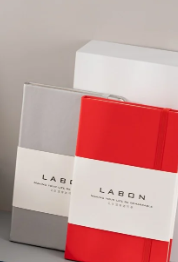
For corporate buyers, this matters. A journal used in offices, meetings, exhibitions, and training rooms needs to stay neat after repeated use. A durable cover also protects the first page, especially when the journal is carried every day.
Executive Gift Presentation
A first page feels more valuable when the whole journal has the right presentation. A premium executive diary can open with a printed logo page, welcome note, annual theme, or recipient name. That makes the gift feel planned instead of rushed.
For company gifts, a journal should not only look good in a photo. It should feel useful after the box is opened. Cover texture, paper quality, binding, logo placement, and first-page design should work together.
Custom Branding Value for Corporate Journals
For brands, the first page is a quiet branding space. It is not as obvious as the cover, but users see it when they begin writing. If it is handled well, it carries the brand message without making the journal feel like an advertisement.
This is useful for employee gifts, business events, company anniversaries, client gifts, museum shops, and retail stationery lines. A journal with a thoughtful first page feels more finished than a notebook with only a logo on the cover.
Printed Welcome Page
A printed welcome page works well for onboarding gifts, training programs, company anniversaries, and conference journals. It can include a short message, event name, project theme, or guide for how to use the journal.
Labon produces custom-printed stationery, including notebooks, journals, diaries, planners, and gift sets. The company supports custom printing, OEM printing, and ODM printing, so the first page can be planned together with the cover, inner paper, packaging, and logo method.
Logo and Theme Customization
Logo placement does not have to stay only on the cover. A logo can appear on the first page, inside cover, belly band, gift box, or printed card. If the journal is for an executive retreat, retail collection, or company milestone, the theme can run through the full product.
This is why custom journals are different from standard stock notebooks. The user gets a more complete item, and the buyer gets better control over how the brand appears.
Gift Set and Event Use
Labon produces notebooks, journals, diaries, planners, paper boxes, and paper gift sets. The company also offers tailored gift set solutions for company anniversaries, souvenir notebooks, museum gift sets, and themed projects.
For these uses, the first page can carry the story. A museum gift journal can start with a short cultural note. A company anniversary journal can open with a milestone message. A souvenir journal can include a location name or travel theme. These small details make the product feel less generic.
Choose Labon for Custom Journal Projects
If you are sourcing custom journals, it helps to work with a factory that knows both production and business use. Labon was established in 2003 in Yiwu, Zhejiang, and has served customers in Europe, the Americas, Southeast Asia, and other markets. Its main products include hard notebooks, soft notebooks, coil books, note books, gift boxes, and related paper products.
The company also lists FSC, BSCI, and REACH certification, which many overseas buyers check before placing stationery orders. Labon’s usual custom process starts with a sample order, then moves to bulk production after the sample is confirmed. That is a practical route because first-page printing, logo color, cover material, paper feel, and packaging should be checked by hand before mass production.
Classic Luxury PU Notebook Recommendation
For this article’s topic, the best product match is the Classic Luxury PU Notebook. It fits personal planning, office notes, executive diary use, and corporate gifting. The PU cover gives it a professional look, while custom inner pages can turn the first page into a title page, brand page, welcome page, index, or name page.
This product is especially suitable when you want the journal to feel more formal. It can work for client gifts, employee gifts, annual meeting notebooks, training journals, or branded retail stationery.
One-Stop Custom Notebook Support
A custom journal project involves more than the first page. You may need to choose cover material, paper type, page layout, logo method, binding style, packaging, and sample approval. Labon’s production process gives buyers a clearer path from idea to finished product.
This matters because many journal problems come from small choices. A nice first page cannot fix weak paper or a poor cover. A good custom plan should check the full product before production starts.
Contact Labon for Your Journal Design
If you are planning a custom journal for corporate gifts, retail shelves, museum shops, school projects, or business events, you can start by reviewing about us to know more about Labon’s background, product scope, and factory experience.
You can also browse our portfolio to check product styles before deciding the cover, paper, and first-page layout. When your idea is clear, the next step is to discuss materials, quantity, sample needs, printing method, and packaging through contact.
Conclusion
The first page of a journal should help the user begin. It can be a title page, purpose page, index, goal page, quote page, welcome page, or printed brand page. The right choice depends on the journal’s real use.
For personal writing, keep it simple and honest. For work, make it structured. For travel, make it memorable. For corporate gifts, make it branded but still useful. If you want one product that fits business writing and gift use well, the Classic Luxury PU Notebook is a practical choice because it supports a clean first-page design, professional cover style, and custom branding.
A journal does not need a complicated opening. It needs a clear one. Once the first page gives the notebook a role, the rest of the pages become easier to fill.
FAQ
Q1: What Should I Write on the First Page of a Journal?
A1: You can write the journal title, your name, the start date, a short purpose statement, an index, a goal list, or a quote that matches the way you plan to use the journal.
Q2: Should the First Page of a Journal Be Blank or Designed?
A2: It can be either, but a simple designed page usually works better if the journal is used for work, planning, gifting, or brand promotion.
Q3: What Is the Best First Page for a Work Journal?
A3: A work journal first page should include the project name, date range, owner name, index space, and a simple symbol guide for tasks, decisions, and follow-ups.
Q4: Can a Custom Journal Have a Printed First Page?
A4: Yes, a custom journal can have a printed title page, welcome page, logo page, index, brand message, name field, or event theme page.
Q5: What Type of Journal Works Best for Corporate Gifts?
A5: A PU cover executive journal works well for corporate gifts because it looks professional, protects the pages, and supports logo printing, inner page design, and gift packaging.