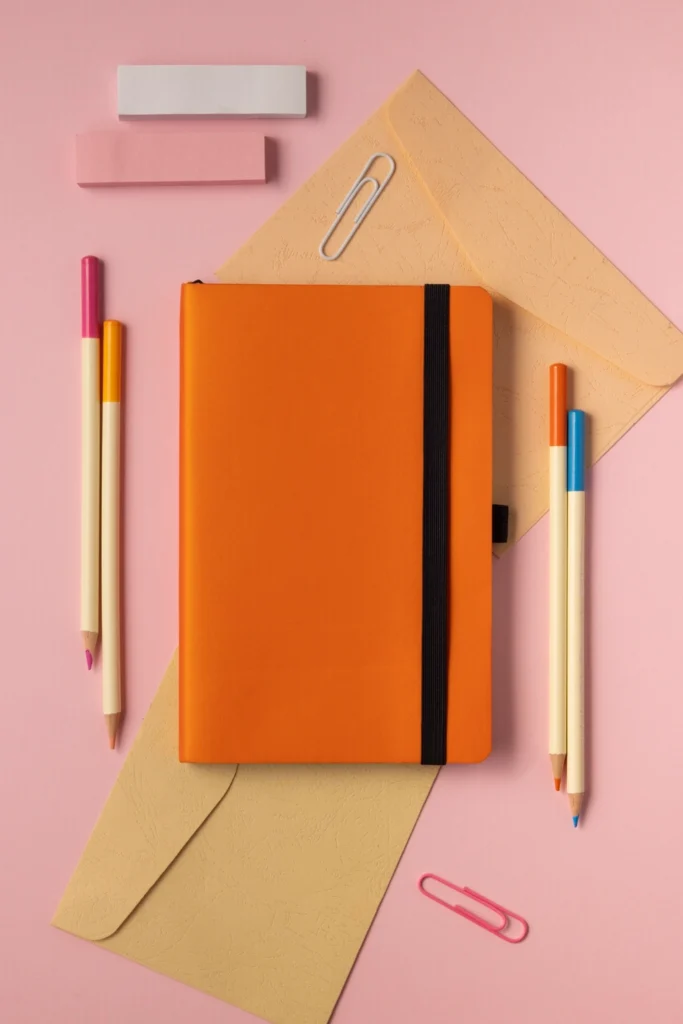
A corporate notebook should be useful before it becomes stylish. Large logos on rough paper in an awkward size do not compensate for these problems.
Custom notebooks for corporate gifts can be ordered as corporate presents, once you have agreed on purpose, budget, size, materials, print, packaging and even a sample.
What Should You Decide Before Designing Custom Notebooks?
A short design brief saves time and keeps the quotation accurate. Start with the recipient and the way the notebook will be used.
Recipient and Gift Purpose
An onboarding notebook may need company information and an A5 format. A client gift may need a firm cover, quiet branding, and a fitted box. Conference notebooks usually need lighter packaging.
Company anniversaries, executive retreats, product launches, and training programs also need different levels of personalization.
Budget, Quantity, and Timeline
Set the budget for the whole gift, including page printing, names, pens, boxes, inspection, and freight.
Quantity affects unit cost and available print processes. Work backward from the event date and allow time for sampling, approval, production, inspection, and transport.
Brand Brief and Product Specifications
Give the supplier one file listing the size, cover material, brand colors, logo position, paper weight, page count, binding, accessories, packaging, quantity, and delivery address.
Reviewing a custom notebook portfolio can also help. Product examples define terms such as “premium” or “simple” much better than general descriptions.
Notebook Size, Cover, and Binding Choices
Then I move on to the physical format of the notebook, as this will give the recipient an impression of what the notebook is like to use, and whether they will actually use it.
A5, B5, and A6 Size Selection
A5 is the safest general choice for corporate gift notebooks because it fits most work bags.
B5 suits project notes and training content. A6 works better for trade shows and travel kits. Choose the size from the use case, not the mockup alone.
Hardcover and Softcover Structures
A hardcover notebook is designed to protect the pages within and provide a solid writing surface. These books are suitable as client gifts, awards and for special events such as a company anniversary.
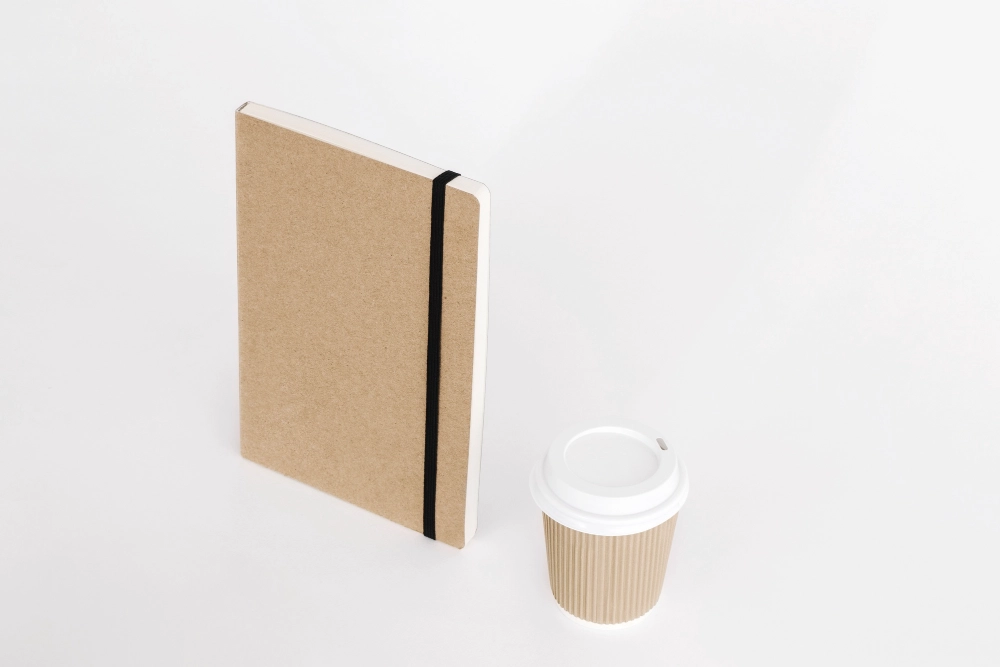
A softcover notebook is lighter and easier to pack for conferences and internal campaigns.
The Labon Classic Hardcover PU Notebook is a useful base for business gifts. Its PU surface can support several logo finishes, while the color, pages, ribbon, elastic band, pen loop, and packaging can be customized.
Sewn, Glued, and Ring Binding
Sewn binding suits frequent use. Glued binding creates a clean spine. Ring binding opens flat and helps during training or desk work.
Choose binding from the expected use, not appearance alone.
Paper and Interior Page Design
The cover makes the first impression, but the paper decides whether the notebook stays on the desk.
Notebook Paper Weight and Pen Compatibility
For business writing, 80 to 100 GSM paper is a useful starting range. Lighter paper controls cost and weight, while heavier paper may reduce show-through.
Test the stock with likely pens. Check feathering, ghosting, bleed-through, drying time, and writing feel.
Ruled, Dotted, Grid, and Blank Pages
Ruled pages work for meetings. If ruled pages are part of the brief, line spacing should also be specified because it affects writing density and overall writing comfort. Dotted pages suit flexible planning. Grid pages help with diagrams. Blank pages fit creative work.
You can also mix layouts, such as planning pages followed by standard ruled sheets.
Branded Inserts and Custom Page Printing
You do not need a large logo on every page. Too much branding can make the gift feel like a sales handout.
A better interior may include a title page, calendar, project pages, and contact details. The rest can stay clean.
For boxed projects, Labon offers company anniversary and notebook gift set solutions for employee, client, souvenir, and institutional programs.
Logo Printing and Artwork Preparation
After the structure is fixed, choose the logo method and prepare files for production. A simple logo printed well usually looks better than a complicated finish on the wrong material.
Debossing, Foil Stamping, and UV Printing
Debossing gives a quiet business look. Foil stamping suits anniversaries or executive gifts. UV printing handles detailed artwork, while screen printing suits simple shapes.
Review the available notebook production process before approving the cover design. Surface texture, logo size, line thickness, and position all affect the result.
Vector Files, Color Codes, and Print Areas
Send editable vector artwork when possible. AI, EPS, and print-ready PDF files are safer than small image files.
Your artwork pack should show logo dimensions, print positions, Pantone or CMYK values, safe areas, inner-page files, and packaging artwork.
Individual Names and Variable Data
Individual names can add value to employee awards, executive retreats, and client programs. They also create another place where mistakes can happen.
Provide names in a clean spreadsheet. Confirm capitalization, titles, departments, font, print position, and maximum character length. Ask for a variable-data proof before production.
Sampling, Packaging, and Bulk Production
Once the files are ready, the sample becomes your working reference. Treat it as a production check, not only as a display piece.
Physical Sample Inspection
Check the cover in office light and daylight. Review logo position, foil coverage, debossing depth, stitching, corners, ribbon, and page alignment.
Write on several pages and test near the center fold. Pack every accessory to make sure nothing rubs or moves during shipping.
Corporate Gift Box and Accessory Planning
A belly band or paper sleeve can work for employee gifts and event orders. A rigid box with a fitted insert is better for executive sets.
Pens, cards, and accessories should support the notebook instead of crowding the package. The box must survive transport.
Final Specifications, Quality Control, and Delivery
After sample approval, prepare one final specification sheet. Record the size, materials, colors, logo method, paper, page count, binding, accessories, packaging, quantity, inspection points, carton marks, and delivery date.
Attach photos of the approved sample. One controlled file gives the purchasing team, factory, and inspector the same reference.
Create Your Corporate Gift Notebook with Labon
When a project includes several materials, print steps, and packaging parts, working with one supplier can make the order easier to control.
Labon Manufacturing and Customization Support
Labon was established in 2003 in Yiwu, Zhejiang. It produces notebooks, journals, diaries, planners, boxes, and related paper products. Its services include custom production, OEM, ODM, sampling, ready-made designs, and bulk supply.
Labon supplies materials such as PU, linen, coated paper, wood-pulp paper, stone paper, watercolor paper and cotton paper. The company also publishes information on certifications such as FSC, BSCI and REACH. It produces approximately 2.32 million notebooks per year and serves customers in 52 countries worldwide.
Labon Classic Hardcover PU Notebook Recommendation
Labon Classic Hardcover PU Notebook is ideal for employee gifts, client programs, meetings, conferences and company anniversaries. With a firm structure to protect pages, the cover is made of PU which can be debossed, foil stamped, screen printed or UV printed.
You can customize the cover color, logo, paper, layout, ribbon, elastic band, pen loop, card, and box. This is often easier to sample than building every part from zero.
Sample Requests and Project Consultation
It is useful to plan in advance the required parameters to receive a quote and they are the following quantity, target size, logo file, cover material, paper weight, page count, inner-page layout, packaging idea, country for delivery and required date of arrival.
You can send these details through the Labon contact page. A complete first brief makes it easier to compare options and move toward a useful sample.
Conclusion
Designing custom notebooks for corporate gifts works best when you make decisions in order. Start with the recipient, purpose, budget, quantity, and deadline. Then choose the size, cover, binding, paper, page layout, logo process, personalization, and packaging.
Approve a physical sample before bulk production and keep every final detail in one specification sheet. A notebook that feels good to use will stay in meetings, bags, and offices long after the gift is handed over.
FAQ
Q1: What Is the Best Size for Custom Notebooks for Corporate Gifts?
A1: A5 is the most flexible size for employee and client gifts. B5 gives more writing space, while A6 works well for portable event gifts.
Q2: Which Paper Weight Works Best for Corporate Gift Notebooks?
A2: Paper between 80 and 100 GSM suits most business notebooks. The final choice should follow the pen type, page count, writing feel, and target product weight.
Q3: Is Debossing or Foil Stamping Better for a Corporate Logo?
A3: Debossing gives a subtle professional finish, while foil stamping creates a more visible effect for anniversaries, awards, and executive gifts.
Q4: Should You Approve a Physical Sample before Bulk Production?
A4: Yes. A physical sample lets you check the cover color, logo finish, paper, binding, personalization, accessories, and packaging before the full order starts.
Q5: What Information Should You Send for a Custom Notebook Quotation?
A5: Send the quantity, size, cover material, logo file, paper weight, page count, binding, inner-page design, packaging needs, delivery location, and required arrival date.