
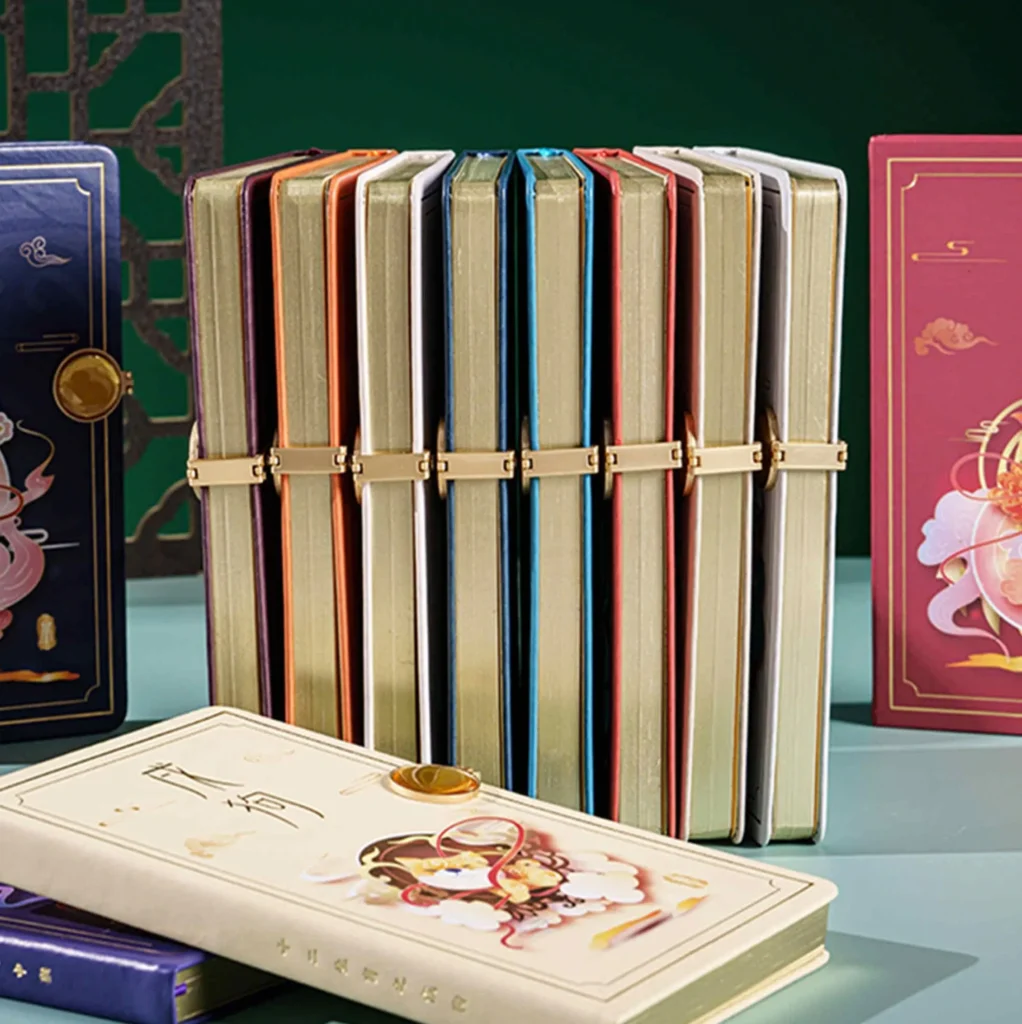
Locating a journal that holds firm after six months of everyday use turns out to be more difficult than anticipated. Numerous customers concentrate on cover styles or sheet density. However, the genuine key to an enduring notebook resides in the spine. Should the binding give way, the complete item basically becomes a collection of scattered loose sheets. Over two decades, Labon has worked from Yiwu, China. There, they have honed skills in crafting upscale paper goods. Their yearly production reaches 2.32 million notebooks. They also serve 52 countries. Thus, they pinpoint precisely where other makers reduce efforts to economize marginally. If you require bespoke OEM arrangements or a branded gift set for a company milestone, their production process emphasizes solid framework that withstands placement at the base of a weighty knapsack.
Why Does Your Choice of Binding Determine the Lifecycle of a Journal?
The manner in which a volume remains united governs its frequency of practical application. A journal that fights to remain accessible or begins splitting at the joints typically gets overlooked in a workspace compartment. Lasting quality goes beyond retaining sheets within the exterior. Instead, it concerns the coordinated balance among adhesive, cord, and surface fabric. Budget-friendly widespread varieties depend predominantly on artificial glues. These glues turn rigid as time passes. Consequently, they provoke the unwelcome condition of pages detaching. This issue harms a mark’s standing.
Structural Integrity and Longevity
The core structure of the notebook requires endurance against frequent access and closure. At the same time, it must avoid deformation in the spine. This design choice ensures that the item sustains its form throughout prolonged service, thereby promoting reliable performance in demanding conditions.
User Experience and Flatness
A notebook that closes abruptly during note-taking causes considerable frustration for experts or scholars. Such interruptions disrupt workflow significantly. Therefore, effective bindings facilitate smooth interaction and consistent usability for all users.
Brand Image and Professionalism
Excellent binding signifies devotion to superior standards. This aspect proves crucial during distribution of goods as business keepsakes or commercial wares. Moreover, it cultivates a perception of dependability that strengthens client loyalty over time.
Core Technologies Behind Premium Smyth Sewn Binding
Leading makers employ Smyth sewing since it represents the premier measure for resilience. In comparison, “perfect binding” merely describes sheets adhered along one side. Smyth sewn journals, however, secure batches of pages, termed signatures, using resilient cord. This approach forms a pliant spine that accompanies sheet motion. The production process demands greater manual input. Yet, it yields volumes suitable for inheritance across generations, avoiding rapid breakdown.
Traditional Section Thread Stitching
Various signatures link via sewing in a persistent sequence. This method guarantees that no solitary sheet ever escapes. As a result, the construction offers unmatched security, which supports the journal’s longevity even under intensive daily manipulation.
Reinforced Backing Glue Application
A slender coating of expert glue spreads across the cords. It provides extra safeguarding without diminishing pliancy. Consequently, this reinforcement bolsters overall stability, allowing the binding to resist wear while maintaining ease of use.
Seamless 180 Degree Flat Opening
Genuine sewn assembly enables the volume to rest fully level on a desk. Thus, it utilizes every portion of the sheet effectively. This capability enhances practicality, as it permits unobstructed writing across the entire surface without resistance.
Advanced Material Selection for High-end Journal Covers
Exterior fabrics fulfill roles exceeding mere attractiveness. They guard the binding against outside dampness and rubbing. A cover that lacks flexibility imposes excess strain on the spine with each turn. Plenty of providers cling to standard PVC. Nevertheless, the trend towards green practices has unveiled superior substitutes. One might discover options from stone paper to watercolor sheets within these volumes. The outer layer, however, demands comparable expertise.
Premium Eco-friendly Vegan Leather
Top-grade PU and vegan leathers convey a sense of opulence. At the same time, they resist residues from skin contact. These selections merge visual refinement with practical toughness, ensuring the journal endures frequent handling without surface degradation.
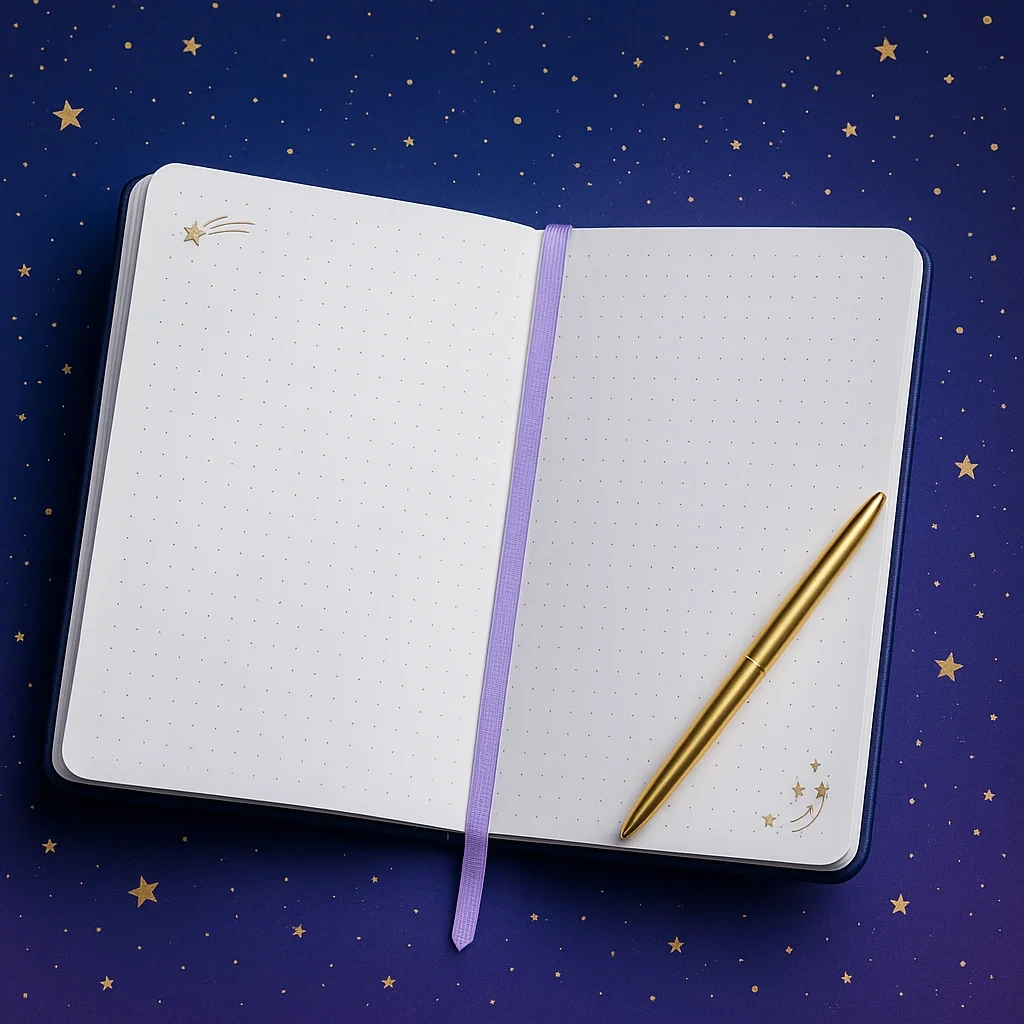
Sophisticated Stardust Reverie Textures
The “Stardust Reverie” Premium Journal incorporates a distinct sensory coating. It harmonizes visual allure with a sturdy, persistent outer shell. This combination not only appeals to the senses but also fortifies the product against environmental stresses over extended periods.
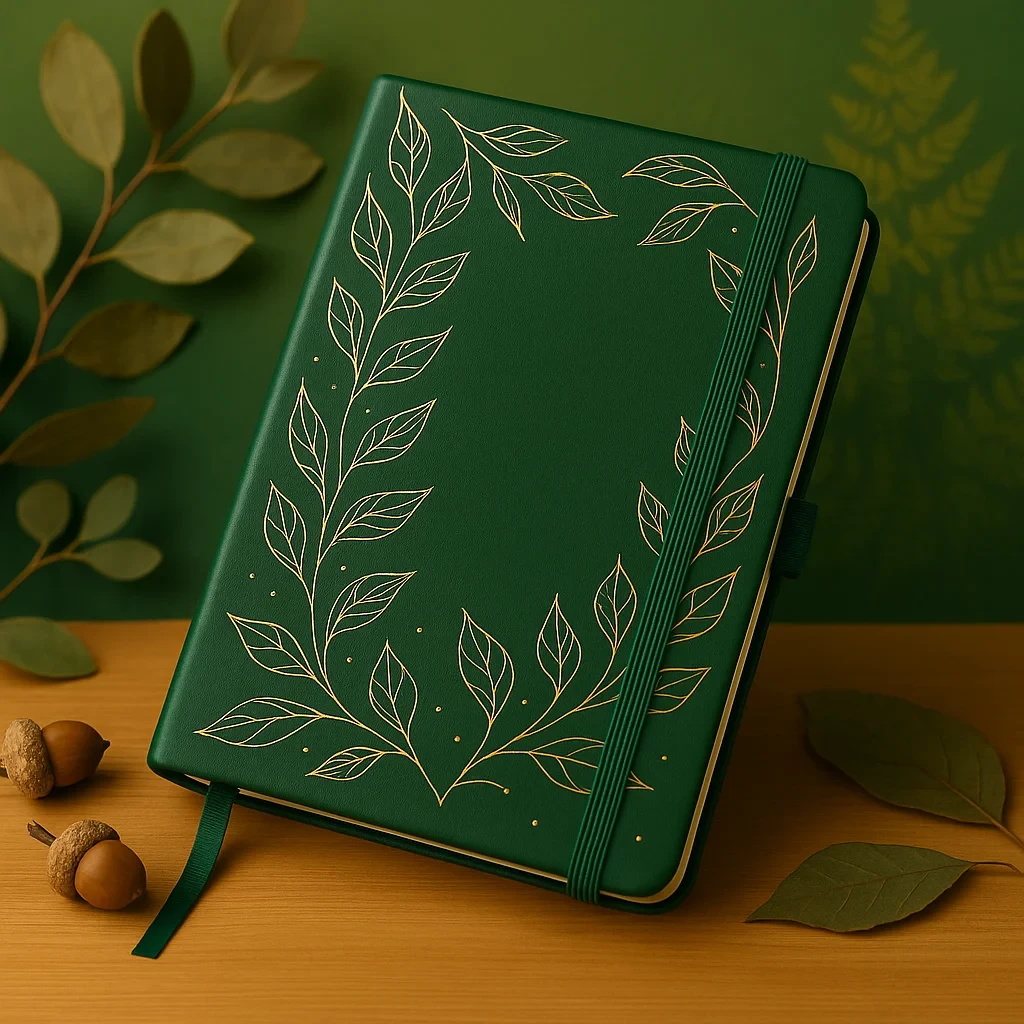
Durable Verdant Whispers Fabric Finishes
To achieve a natural essence, the “Verdant Whispers” Premium Journal delivers a textile-inspired layer. It conceals abrasions and upholds pigmentation amid prolonged interaction. Such a finish promotes sustained appearance, which is vital for maintaining the journal’s appeal in professional contexts.
Critical Steps in the Professional Production Process
Producing a resilient journal involves exacting care. Within a skilled workshop, base elements face strict quality control right at entry. Assembly exceeds simple joining. It includes regulating adhesive solidification and equipment pull. A slight 1mm shift in creasing can tilt the whole volume. Eventually, this causes irregular abrasion on the assembly.
Precision Paper Folding and Gathering
Devices need to position sheet texture accurately. This prevents twisting or folding in damp settings. Proper alignment, when followed by meticulous collection, safeguards against distortion and ensures the pages remain flat and functional throughout the journal’s lifespan.
Automated High-speed Spine Compressing
Delivering suitable force guarantees a dense yet robust spine. Importantly, it avoids excessive firmness that hinders access. This balanced compression enhances the binding’s ability to flex naturally, thereby supporting seamless operation during repeated openings.
Strict Quality Control and Stress Testing
Personal checks occur at each phase. They confirm firm cord work and exact exterior placement. These thorough assessments, coupled with endurance evaluations, uphold standards that prevent defects and assure consistent quality in the final output.
Innovative Design Elements of the Labon Portfolio
Resilience does not imply plain aesthetics. Actually, several prime portfolio examples demonstrate that elaborate patterns retain remarkable strength. Ranging from tailored emblem pressing to dedicated enclosure boxing, the objective is to fashion an article resembling a luxury implement. Certain makers steer clear of intricate additions. They worry these might undermine the volume’s framework. Seasoned workshops, however, master their smooth incorporation.
Custom Anniversary Gift Set Integration
Customizing a notebook for a distinct occasion commonly entails including compartments or flexible fasteners. These elements demand secure fixation into the assembly. This thoughtful embedding not only boosts functionality but also reinforces the structure, ensuring the journal performs reliably in varied uses.
Artistic Museum Collection Themes
Fabricating articles for heritage venues calls for elevated craftsmanship. It must correspond to the venue’s creative worth. Such alignment elevates the product’s cultural resonance while preserving structural robustness for enduring value.
Elegant Corporate Souvenir Branding Options
Employing methods such as metallic pressing or indentation imparts refined depth. This elevates a plain notebook to a corporate emblem. These applications, when integrated carefully, amplify identity without compromising the underlying durability of the binding.
Your Reliable Partner for Customized Stationery Solutions
Seeking a provider who grasps the practical aspects of paper articles requires an ally with suitable qualifications. Endorsements like FSC and BSCI exceed mere emblems. They validate a workshop’s compliance with international guidelines for workforce and supply origins. Be it in Europe, the US, or Southeast Asia, direct linkage with the maker via direct contact lets you eliminate agents and secure precisely what your label needs.
Specialized OEM and ODM Services
You may present your concepts or utilize available patterns to form something wholly distinct for your venture. This adaptability fosters innovation, enabling tailored solutions that align closely with business objectives and market demands.
Global B2B Supply Chain Expertise
Featuring ledgers in the US, Europe, and Hong Kong, the transaction and delivery system suits worldwide promptness. This infrastructure minimizes complications, facilitating smooth exchanges for global partners engaged in stationery trade.
Direct Inquiry for Premium Journal Bulk Orders
Obtaining a prototype in 5-7 days enables you to evaluate assembly resilience personally. This occurs before pledging to comprehensive manufacturing. Such testing instills assurance, as it highlights the item’s quality and guides informed scaling decisions.
FAQ
Q1: What is the difference between Smyth sewn and glued binding?
A: Smyth sewn binding uses thread to stitch page signatures together, allowing the book to lay flat and preventing pages from falling out, whereas glued binding relies solely on adhesive and often cracks over time.
Q2: Can I get a sample of a custom journal before placing a large order?
A: Yes, the standard process involves creating a high-quality sample within 5-7 days for your confirmation before moving to mass production.
Q3: Does Labon Stationery offer eco-friendly material options?
A: Absolutely, the company uses sustainable materials like stone paper and holds FSC certification to meet environmental responsibility standards.
Q4: What happens if there are quality issues with my order?
A: The company has a clear policy to either compensate for faulty products or provide alternative solutions based on the specific problem identified after sale.
Q5: How long has Labon been in the stationery industry?
A: The company was established in 2003 and has over 20 years of experience in professional notebook and journal manufacturing.