
Selecting a notebook involves more than an attractive cover. If you have encountered ink seeping to the following page or paper that seems coarse like sandpaper, you understand that paper weight—measured in GSM—serves as the key factor. Quality stationery depends on the physical feel of the page. This aspect highlights Labon. As a seasoned participant in the B2B export sector, they go beyond basic production of notebooks; instead, they design them with precision. Starting with FSC-certified pulp and overseeing a thorough production process, this company manages extensive OEM initiatives for museum presents and business milestones. Their portfolio demonstrates a clear understanding of elements in a 1000-word SEO blog post, much like their handling of a 120 GSM ivory sheet. When seeking a collaborator who appreciates the personal elements in production, they emerge as the primary specialists for custom gift sets.

Why Does GSM Matter for High-End Stationery Sourcing
Grams per Square Meter, or GSM, indicates the precise weight of a paper sheet. It functions as the standard term for quality within the field. As you procure for a label, the GSM determines the initial sensation the final user experiences when their pen contacts the surface. Paper with greater weight typically contains additional fibers, and this composition yields improved outcomes with various ink varieties.
Definition of Paper GSM
Paper GSM represents a worldwide standard for assessing paper thickness. It determines the mass in grams for one square meter of paper. Values such as 60 or 70 GSM fit inexpensive office blocks, whereas superior journals commence at elevated figures. This measurement allows consistent evaluation among different suppliers and regions.
Relationship Between Thickness and Opacity
Opacity describes the extent to which light or ink penetrates to the reverse side. Paper featuring high GSM exhibits stronger opacity by nature. This quality attracts buyers who dislike “ghosting,” a situation where traces of earlier writing interfere with the active page. Consequently, the writing environment remains undisturbed and effective.
Impact on Ink Absorption and Bleed-Through
Bleed-through arises when paper fibers fail to retain the liquid ink adequately. Paper of substantial weight behaves as a regulated absorber. It draws in an appropriate quantity of ink to maintain sharp lines, while preventing the liquid from permeating entirely through the material. This property preserves the usability of both surfaces without unwanted marks.
Technical Principles of Premium Paper Selection
The study of paper extends further than weight alone. Consideration must include the compression and processing of fibers. Even with elevated GSM, a notebook may feel abrasive if the surface preparation lacks quality. Choosing premium varieties entails aligning the paper’s “tooth”—its inherent texture—with the requirements of contemporary pens.
Fiber Density and Surface Smoothness
Fibers arranged closely avoid the pen point from snagging or resisting movement. Smoothness results from calendering, a method where paper moves between large rollers. In premium export items, a soft finish generally surpasses a coarse, budget-oriented texture. This preference enhances the practical comfort for end users in routine applications.
Acid-Free Properties for Long-Term Archiving
Discoloration in pages undermines historical preservation. Paper free from acid retains its hue and durability over extended periods. Gift outlets in museums and upscale brands therefore require pH-neutral substances during procurement. Such choices safeguard documents against gradual breakdown in archival settings.
Performance With Fountain Pens and Gel Ink
Fountain pens deposit considerable amounts of moist ink. Certain paper formulations manage this application without “feathering,” the effect where ink disperses like threads over the surface. Paper designed for experts ensures that the outlines of each character remain precise. Thus, users achieve consistent clarity with advanced writing instruments.
Comparison of Common Notebook Paper Weights
Not all assignments demand the thickest paper options. Suitability centers on selecting the appropriate material for the task. Cardstock proves unsuitable for a 400-page substantial journal, as it increases portability issues. Global purchasers commonly favor particular GSM intervals for dependable performance.
80 GSM for Daily Lightweight Note-Taking
This weight establishes the baseline for widely distributed notebooks. It remains lightweight and preserves the book’s compact form. Ballpoint pens function effectively on it, though a robust rollerball may produce faint impressions on the opposite side. In general, it supports casual recording without added bulk.
100 GSM to 120 GSM for Professional Business Journals
This interval serves as the optimal range for fine stationery. The material conveys a solid and costly impression. Corporate presents of high caliber typically incorporate this level, since it accommodates diverse pen forms without rendering the volume cumbersome for professional carriers. Its adaptability suits various business contexts seamlessly.
160 GSM Plus for Artistic Sketching and Heavy Ink
View this as comparable to lightweight cardstock. It suits bullet journals, marker applications, or mild watercolor efforts ideally. Although targeted, it gains favor among dedicated artistic groups who prioritize endurance above quantity of sheets. This selection aligns with demands in creative professional circles.
Material Innovation in Labon Custom Notebooks
Advances in stationery frequently originate from foundational elements. Superior raw components streamline production and enhance product dependability. Examining about us content in this domain reveals commitments to excellence and ecological responsibility. Labon Stationery exemplifies this dedication through integrated practices.
FSC Certified Sustainable Paper Sources
Purchasers focused on ecology seek the FSC emblem prominently. It signifies that pulp derives from forests under responsible oversight. No longer optional, this attribute constitutes a necessity for numerous markets in Europe and America. It supports compliance with environmental standards in international commerce.
Ivory and Cream Tones for Eye Protection
Intensely white paper often causes discomfort beneath workplace illumination. Gentle ivory or cream shades prove far kinder to vision in prolonged writing activities. These tones impart a traditional, elevated appearance that stark white cannot equal. Users benefit from reduced fatigue in extended use.
Specialized Coating for Smudge-Free Writing
Select premium papers incorporate a subtle layer to regulate drying duration. This measure minimizes blurring, particularly benefiting left-handed individuals. While a minor element, it indicates the producer’s regard for the end user’s experience. Accordingly, the item delivers consistent performance in practical scenarios.
Application of Heavyweight Paper in Signature Products
Actual implementation bridges specifications to everyday utility. An effectively planned notebook employs its paper density to harmonize with the exterior styling. A deluxe gold-foiled volume, for example, demands robust, firm pages to align with the cover’s substantial character. This coordination amplifies the product’s overall value.
Celestial Light Notebook with Gold Foil Detailing
The Celestial Light Notebook illustrates exceptional artisanal work. The internal ivory paper gets selected deliberately to withstand the cover’s gold foil sun and star accents, positioning it as a superior gift selection. This thoughtful pairing ensures resilience and aesthetic coherence in presentation contexts.

Crystal Diamond Hardcover Notebook for Luxury Gifts
Individuals desiring distinctive items discover that the Crystal Diamond Hardcover Notebook provides a sensory interaction unmatched by inexpensive substitutes. The paper density inside achieves equilibrium, allowing the volume to rest evenly when opened, a defining feature of sturdy hardbound construction. Such design facilitates effortless writing across full spreads.
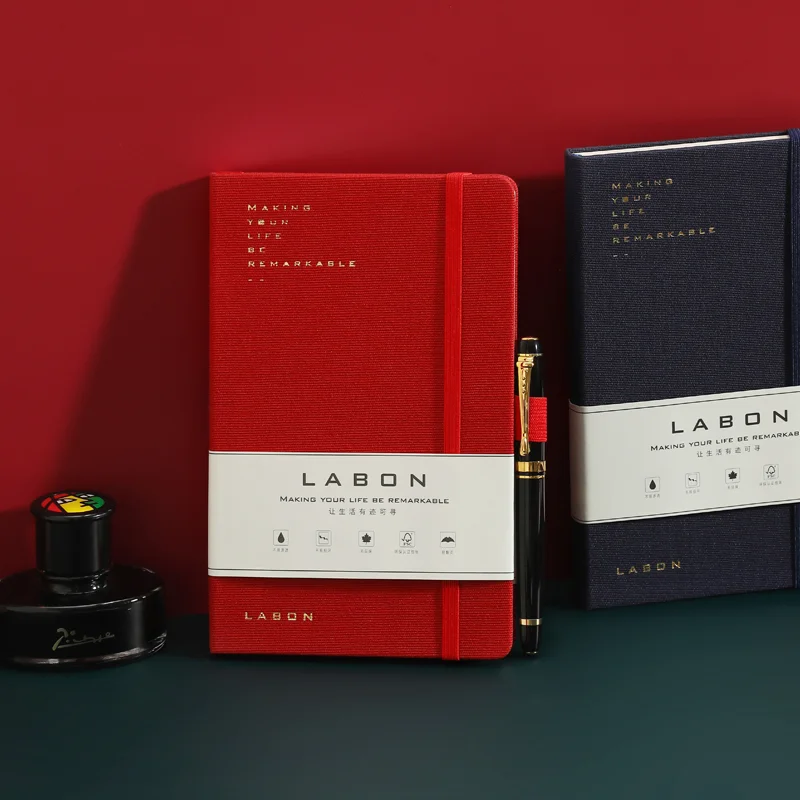
Bespoke Inner Pages for Corporate Anniversary Sets
Personalization frequently entails imprinting logos or subtle marks across all sheets. This process necessitates paper capable of enduring dual-sided reproduction without diminished sharpness. Substantial weight guarantees that organizational identifiers appear defined on each face of the material. Therefore, it bolsters the effectiveness of branding efforts.
Manufacturing Excellence in Labon Production Process
Ultimate notebook caliber hinges on equipment and personnel involved. Optimal paper may degrade due to faulty assembly or irregular trimming. Pristine workshop conditions and accurate adjustments distinguish established exporters from modest operations. Labon Stationery upholds these standards consistently.
Precision Cutting and Binding Consistency
Imperfect page trimming hinders the notebook from aligning properly when closed. Assembly holds comparable significance; a “lay-flat” configuration enables comfortable inscription over the entire surface. Sophisticated thread-sewing apparatus fulfills these criteria. Collectively, these techniques yield reliable and user-friendly outcomes.
Strict Quality Control from Pulp to Finished Product
Quality oversight extends beyond the concluding inspection. It occurs throughout each phase of development. From evaluating paper humidity to verifying adhesive resilience in the binding, all particulars influence items potentially stored in storage for extended durations prior to distribution. This methodical vigilance secures uniform excellence.
Customization Capabilities for Global Brand Importers
Producers with adaptability can modify for precise cover hues via Pantone or tailored grid arrangements on sheets. This range proves essential for enterprises across locales such as Latin America or Southeast Asia. Should a particular initiative arise, the contact section facilitates dialogue on requirements. It thereby fosters customized resolutions for diverse international needs.
FAQ
Q1: What is the best GSM for fountain pen users?
A: Usually, 100 GSM to 120 GSM is the best choice because it provides enough density to prevent feathering and bleed-through while remaining smooth enough for the nib to glide.
Q2: Does higher GSM always mean better quality?
A: Not necessarily. While higher GSM is thicker, the quality also depends on the fiber type and surface treatment. A well-made 80 GSM paper can sometimes outperform a poorly made 100 GSM sheet.
Q3: Why do some notebooks use ivory paper instead of white?
A: Ivory paper reduces glare and eye strain, making it better for long writing sessions. It also provides a more premium and sophisticated look compared to standard bright white printer paper.
Q4: What does FSC certified paper actually mean for my order?
A: It means the paper is sourced from forests that are managed in an environmentally and socially responsible way. It helps your brand meet sustainability goals and appeals to eco-conscious consumers.
Q5: Can I customize the inner page layout for a bulk order?
A: Yes, professional manufacturers allow you to choose between lined, dotted, squared, or completely blank pages, and you can even add custom headers or logos to every sheet.