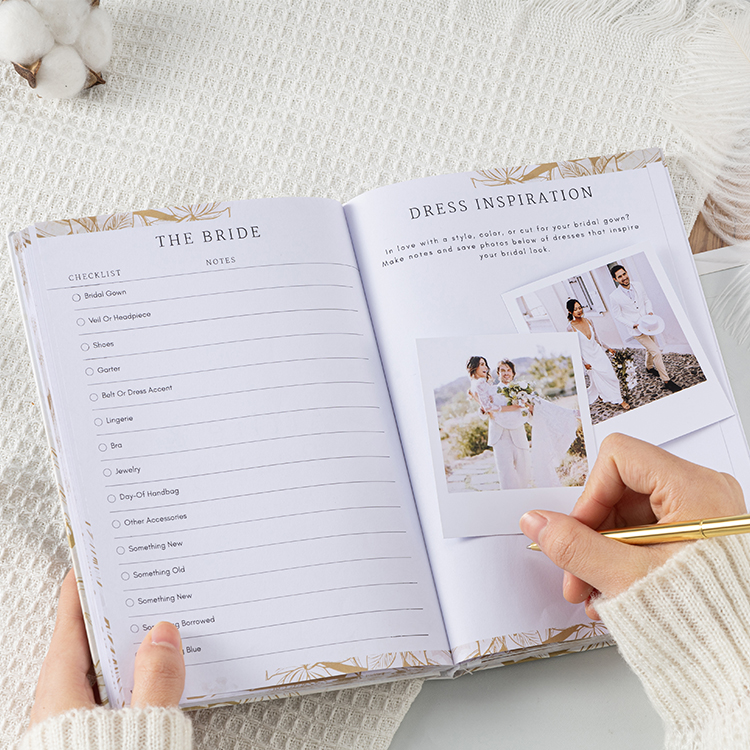
Custom notebook manufacturing normally follows five approval stages: requirement confirmation, specification development, sampling, bulk production and quality control, and packaging and shipment. Buyers should approve the output of each stage before production moves forward.
| Manufacturing Stage | Buyer Input | Manufacturer Output | Approval Checkpoint |
|---|---|---|---|
| Requirement Confirmation | Size, quantity, use, target market, deadline, and budget | Written project brief | Confirm all commercial requirements |
| Specification Development | Paper, cover, binding, logo, accessories, and packaging | Technical specification and artwork proof | Approve materials, dimensions, and artwork |
| Sampling | Final specification and print files | Physical production sample | Test writing performance, colour, binding, and packaging |
| Bulk Production and QC | Approved sample | Finished notebook batch | Inspect page sequence, logo position, binding, and finish |
| Packaging and Shipment | Packing and shipping requirements | Packed cartons and shipping documents | Confirm carton protection and shipment schedule |
Overview of Custom Notebook Manufacturing
Custom notebook manufacturing is a fine blend of creativity, perfection, and expertise in the use of materials to provide personalized stationery solutions. Custom notebooks are in high demand now as businesses started opting for notebooks with unique designs based on their requirements.
Key Components of Custom Notebooks
There are three main components of a custom notebook: the cover, the pages inside it, and the binding. Each component affects the functionality, durability, and appearance of the finished notebook. The first impression is the cover and it can be leather or synthetic. Interior pages dictate usability, be it lined, dotted, or blank. Finally, binding ensures durability and simplicity.
Importance of Customization in Notebook Production
Customization can turn mundane notepads into instruments of expression and marketing. Customizated notebooks are effective for both brand promotion and preference as they add uniqueness through different designs, logos, or layouts. Such a degree of customization not only brings value but also differentiates the products from others in a competitive market.
Material Selection for Custom Notebooks
How Do You Choose the Right Cover Materials?
The choice of the right covering is the key to the production of a customized notebook. These can be leather for a high-end appearance, fabric for an elegant look, or synthetic materials for affordability and durability.
Leather, Fabric, and Synthetic Options
Leather covers ooze sophistication and are suitable for corporate gifting or premium branding initiatives. They can be used in various patterns and colors, while still looking for professional, fabric covers. PU provides an environmentally friendly alternative to common materials without losing the high quality of the product.
What Are the Best Paper Types for Notebooks?
The paper inside a notebook significantly impacts its usability and writing experience. Choosing high-quality paper ensures smooth writing with minimal ink bleeding or feathering.
Paper Weight and Texture Considerations
Paperweight is measured in GSM (grams per square meter), with heavier paper offering greater durability. LABON’s online notebook configuration currently lists standard paper weights of 80, 90, and 110 GSM, together with white, ivory, premium ivory, recycled white, and recycled ivory paper options. Available page counts range from 128 to 528 printed pages, while interior formats include plain, ruled, dotted, and grid layouts. Textured papers such as watercolor or cotton add a tactile dimension suitable for artistic purposes.
| Paper Specification | Suitable Application | Main Sample Check |
|---|---|---|
| 80 GSM | Promotional notebooks and lightweight office notebooks | Ghosting, page opacity, and two-sided writing |
| 90 GSM | Daily planners and general retail journals | Ink drying, page turning, and finished weight |
| 110 GSM | Premium journals and corporate notebooks | Spine bulk, binding strength, and portability |
These specifications should be treated as starting points. Buyers should test their intended ballpoint, gel, rollerball, or fountain pen on the physical sample before approving bulk production. Buyers can configure the paper and page specification before requesting a physical production sample.
Designing the Custom Notebook Layout
How Can You Create Unique Cover Designs?
A notebook’s cover design is its most striking feature. Incorporating branding elements such as logos or slogans enhances its professional appeal while adding personality.
Branding and Aesthetic Choices
Combining branding with visually appealing designs creates a balance between functionality and style. Metallic foils, embossing, or UV printing can elevate the overall look.
| Cover Process | Best-Fit Application | Main Procurement Check |
|---|---|---|
| Foil Stamping | Executive gifts and premium retail journals | Foil coverage, edge clarity, and rub resistance |
| Debossing | Corporate notebooks with subtle branding | Impression depth, logo position, and material recovery |
| UV Printing | Full-colour artwork and detailed graphics | Colour accuracy, adhesion, and scratch resistance |
| Screen Printing | Bold single-colour logos and promotional notebooks | Ink coverage, Pantone matching, and edge sharpness |
| Metal Logo | Luxury gift sets and high-value corporate projects | Attachment strength, alignment, and surface protection |
The final process should be selected according to the cover material, logo detail, order quantity, colour requirements, and expected handling conditions. Buyers can review LABON’s cover customization methods to compare compatible branding techniques.
What Interior Layouts Are Available?
Interior layouts determine how users interact with their notebooks daily. Offering diverse options ensures that every customer’s need is met.
Lined, Dotted, Blank, and Grid Pages
Use lined pages for jotting down notes; dotted designs for bullet journaling aficionados; blank pages for letting the creative juices flow; and grid pages for technical sketches or diagrams.
Printing Techniques for Custom Notebooks
Why Is Digital Printing Ideal?
Digital printing offers precision and high-quality results suitable for intricate designs or small-batch orders. It allows vibrant color reproduction while maintaining cost efficiency.
Is Screen Printing Suitable for Unique Finishes?
Screen printing excels at producing bold designs with unique finishes like metallic inks or raised textures. This method is particularly effective when creating striking visual elements on covers.
Binding Methods in Notebook Manufacturing
What Are Common Binding Techniques?
Binding methods influence both durability and ease of use. Popular techniques include saddle stitching, spiral binding, perfect binding, and case binding.
Saddle Stitching and Spiral Binding
Saddle stitching involves folding sheets together with staples along the spine—ideal for lightweight notebooks. The spiral binding uses coils to allow full 360-degree rotation of pages.
Perfect Binding and Case Binding
Perfect binding glues pages together at the spine for a sleek finish suitable for thicker notebooks. Case binding provides hardcover durability often used in premium journals or gift sets.
What Factors Influence Binding Choices?
The choice of binding depends on factors such as intended use, budget constraints, aesthetic preferences, and production timelines.
| Binding Method | Best-Fit Application | Opening Performance | Main QC Check |
|---|---|---|---|
| Saddle Stitching | Slim event notebooks and promotional booklets | Opens relatively flat | Staple position, page creep, and trimming |
| Spiral Binding | Training notebooks and frequently used planners | Full 360-degree page rotation | Coil alignment, punch spacing, and page movement |
| Perfect Binding | Branded notebooks with a clean square spine | Limited lay-flat performance | Glue coverage, spine cracking, and page retention |
| Case Binding | Premium journals and corporate gift notebooks | Durable hardcover structure | Hinge strength, endpaper bonding, and spine alignment |
| Singer Sewing | Design-led notebooks with exposed stitching | Flexible opening | Thread tension, stitch spacing, and knot security |
Paper weight must be evaluated together with binding and page count. For example, an A5 notebook with 192 printed pages contains 96 physical sheets. Its approximate inner-paper mass can be calculated as:
0.148 m × 0.210 m × 96 sheets × GSM
The paper block weighs approximately 239 g at 80 GSM, 269 g at 90 GSM, and 328 g at 110 GSM, excluding the cover, endpapers, glue, ribbon, and packaging. Changing from 80 GSM to 110 GSM adds about 90 g per notebook and may affect spine width, carton weight, freight cost, and binding feasibility.
Adding Personalized Features to Notebooks
How Can You Incorporate Logos and Branding Elements?
Making notebooks logos and branding compliant is a strategic way to make them professional and consistent with your company values. Where the design is made to shine using intricate methods such as embossing/debossing or UV printing. This means you can use these methods to build a notebook that fulfills more than its utility function but serves as a marketing vehicle as well.
What Are the Benefits of Branding?
Incorporating your logo or tagline into the design instantly associates the poster with you and your products in your audience’s mind. It improves brand recall and stays in the minds of clients or employees who use these notebooks daily. Branded notebooks also make for a great corporate gifting option that helps strengthen the bond with partners and customers.
What Extras Can You Add for Functionality?
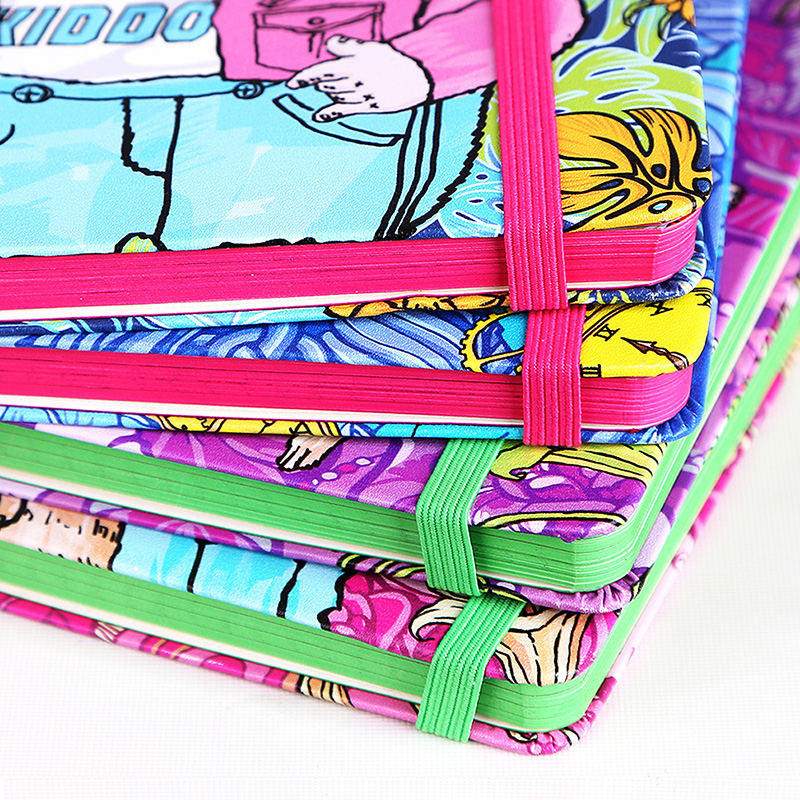
Functional extras like pockets or bookmarks and closures like elastics can also make a big difference to the user experience.
Why Are These Features Important?
These have included features that cater to different needs and make the notebook more versatile and attractive. For example, people working in professional settings might find pockets to hold papers useful, while students may like bookmarks for quick reference.
Quality Control in Notebook Production
How Do You Ensure Durability and Functionality?
Durability and functionality are critical in notebook manufacturing. Implementing stringent quality control measures ensures that every product meets high standards. From selecting robust materials to testing binding strength, each step is meticulously monitored.
What Role Does Material Quality Play?
Quality materials mean quality durability. Good cover materials include PU leather, linen, etc., which not only last longer but also look good. In the same regard, using high-quality paper eliminates the risk of incidents like pen bleeding through or ripping while being used.
Why Is Print Accuracy Crucial?
Print accuracy is essential for maintaining professionalism in custom notebooks. Advanced printing technologies like digital printing enable the precise reproduction of intricate designs and text. Regular inspections during production help identify any inconsistencies early on.
Packaging and Presentation of Custom Notebooks
How Can Packaging Enhance Product Appeal?
A good first impression is half the battle; for that, you need to work on packaging design. Specially arranged elegant boxes or sleeves minimize the risk of damage to the notebook in addition to making them look stylish and gift-ready. The notebook comes with sophisticated boxes or sleeves that provide a perfect minimalist cover for protection and make it gift-ready.
Are There Sustainable Packaging Choices?
Sustainability is increasingly becoming a priority in packaging solutions. Using eco-friendly materials like recycled cardboard aligns with environmental values while maintaining quality standards. LABON lists FSC, BSCI, and REACH-related credentials in its company materials. Buyers should request the current certificate number, validity period, certification scope, test report, and material-specific documentation for the exact notebook and packaging configuration rather than assuming that every product option is automatically covered.
Recommendations for Choosing LABON Products
Why Should You Consider LABON’s Expertise?
LABON is a notebook manufacturing veteran with more than 20 years of experience in the field. Having experience in making various stationery items, this company provides customized solutions that fulfill functional as well as aesthetic objectives.
What Are Examples of Premium Product Lines?
LABON has products from the most luxury leather journals to sustainable notebooks made from eco-friendly resources. Buyers can review LABON’s notebook and gift-set portfolio as a structural and visual reference before developing a fully customized specification. Occasionally, the clients even mix and match gift sets, such as a corporate anniversary or cultural event set— to prove how versatile they are in providing for their clients.
| Portfolio Reference | Suitable Application | Specification to Confirm |
|---|---|---|
| Labon Classic Hardcover PU Notebook | Executive gifts and branded office notebooks | Size, paper GSM, logo process, ribbon, and packaging |
| Diamond Grid Planner | Daily planning and stationery retail | Grid accuracy, page sequence, binding, and opening performance |
| Dreamy Starry Planet Gift Set | Museum retail, company anniversaries, and souvenir projects | Artwork colour, accessory placement, insert fit, and carton protection |
| Labon Classic Gift Box Set | Corporate gifting and promotional campaigns | Notebook-to-box fit, logo consistency, and presentation quality |
These products should be used as format references rather than fixed specifications. The final paper, cover, binding, accessories, and packaging should be confirmed through an approved sample.
What Benefits Come With Partnering With LABON?
What you get is known quality products governed through stringent quality checks with LABON to partner with them. They rapidly produce samples within 5–7 days instead of taking a few weeks, helping you preview the design quickly before placing a bulk order. LABON reports more than 20 years of notebook manufacturing experience, annual production of approximately 2,320,000 notebooks, and customers served across 52 countries. Its online configuration page states a standard lead time of approximately 3–4 weeks for custom-made notebooks, although the schedule should be reconfirmed according to quantity, construction, printing complexity, packaging, and delivery date. Disclosed customer references include Archer & Olive, Freedom Mastery, and Anecdote Goods, but every new project should still pass physical sample approval before bulk production.
Before requesting a quotation, provide the finished size, orientation, printed page count, paper type and GSM, paper colour, interior layout, binding, cover material, logo process, accessories, order quantity, individual packaging, carton requirements, destination market, and required delivery date. Buyers can then submit a project-specific notebook enquiry to confirm the sample schedule, MOQ, bulk lead time, quality-control checkpoints, and quotation.
LABON’s professional team can also review material, construction, printing, and packaging requirements to help convert the buyer’s concept into a production-ready specification.
FAQs
Q1. What are some of the eco-friendly options available in the custom notebook?
A: You can use eco-friendly options like recycled paper or FSC-certified materials for the covers and interiors.
Q2: How does branding enhance the value of custom notebooks?
A: Branding adds a professional touch while increasing visibility and recognition among users.
Q3: How does LABON differentiate itself as a manufacturer?
A: LABON leverages 20+ years of expertise with technology to provide specialized high-quality services on time.