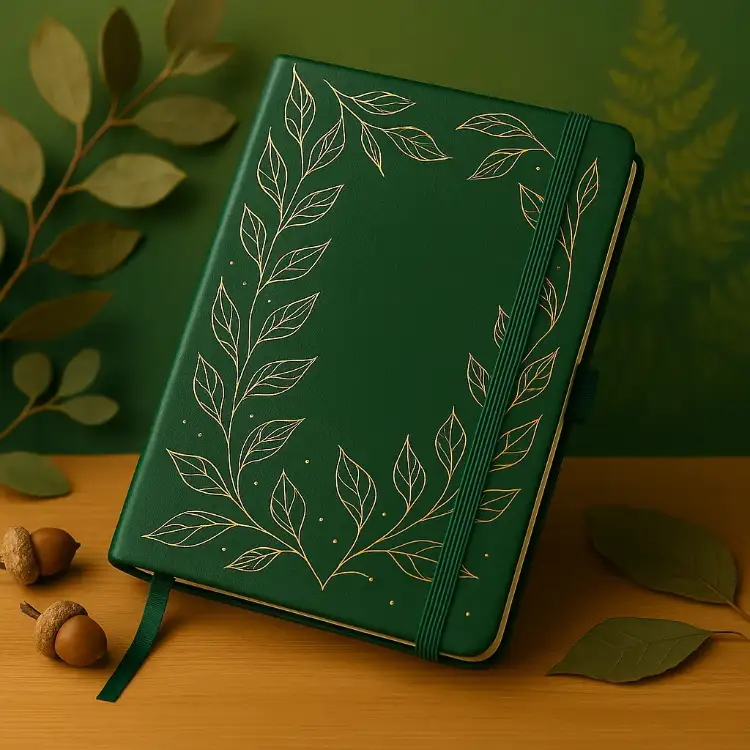
A journal needs enough space to feel useful, but more pages do not always make it better. A thick journal can be satisfying on a desk and inconvenient in a bag. A slim book is easy to carry but may end before a long project or guided program is complete.
The right journal page count starts with frequency and duration. A daily journal planned for three months has a different requirement from a meeting book, travel diary, gratitude journal, or promotional gift. The interior layout also changes how quickly people use the pages.
For custom orders, page count affects more than writing capacity. It changes the spine, weight, opening behavior, packaging, and sometimes the cover construction. Buyers should choose it together with paper and binding rather than adding pages at the end of the design process.
How Many Pages Should a Journal Have?
Many practical journals fall within a broad range rather than one universal standard. The better answer is to calculate how many entries the user needs, add front and back matter, and then test whether the resulting book still feels comfortable. A page is one printed side, while a sheet has two sides, so the quote must state which unit is being counted.
Retail Journals
A retail journal should balance visible value with portability and shelf position. Estimate how many weeks or months the intended routine should last. Guided prompts use space faster than open writing pages because headings, instructions, and check-ins occupy part of each spread.
Work and Meeting Journals
A work journal may need dated pages, project sections, meeting templates, action lists, and reference pages. Estimate the number of meetings or working weeks, then decide whether the user needs one notebook per project, quarter, half-year, or year.
Gift and Event Journals
A gift journal often needs enough pages to feel substantial without making the package heavy. Event notebooks may be intentionally shorter if they support a conference, workshop, or onboarding period. The package, pen, and other gift-set items should be planned around the finished book.
Page Count, Paper, and Spine Thickness
Page count cannot be separated from paper. Increasing the number of pages adds thickness and weight, but changing paper can alter both. A buyer who moves to a heavier sheet and keeps the same page count may need a wider spine and revised cover artwork.
Sheets, Pages, and Printed Sides
Write the counting method at the top of the specification. One physical sheet creates two leaves and four printable page sides when folded into a bound section, while ordinary product listings often use “page” to mean one side. Suppliers and buyers can therefore describe the same book with different numbers unless the basis is explicit.
Page maps should use sequential page numbers even when some sides remain blank. If a blank page is part of the designed sequence, mark it as intentionally blank rather than leaving an empty row. This helps prepress teams distinguish a real blank from missing artwork and makes the final count easier to audit.
Paper Caliper and Bulk
GSM describes mass per area, but it does not fully predict the thickness of a finished journal. Two papers with the same weight can have different caliper, stiffness, coating, or bulk. Ask the supplier to estimate the bound spine from the chosen paper and confirm it again on the physical sample.
Changing paper to reduce thickness can also change opacity, writing feel, and ink behavior. Do not approve a thinner alternative from a technical sheet alone. Compare printed and written samples, then check whether the reduced spine still supports the cover and branding planned for the product.
Binding Capacity and Opening Feel
Every binding system has a practical page-block range. A construction that opens comfortably at one thickness may resist near the center when more sections are added. Coil diameter, adhesive area, sewing structure, cover hinge, and inner margin all need to match the final block.
Ask the sample maker to use the intended number of pages and paper, not a thinner demonstration book. Open the first, middle, and final sections on a desk and in the hand. Check whether the book stays usable without excessive force and whether printed content remains visible near the spine.
Paper opacity also affects usable capacity. If ink shows strongly through the reverse side, users may write on only one side and consume the journal faster. Test representative pens on both sides of the sheet before deciding that a higher page count is necessary.
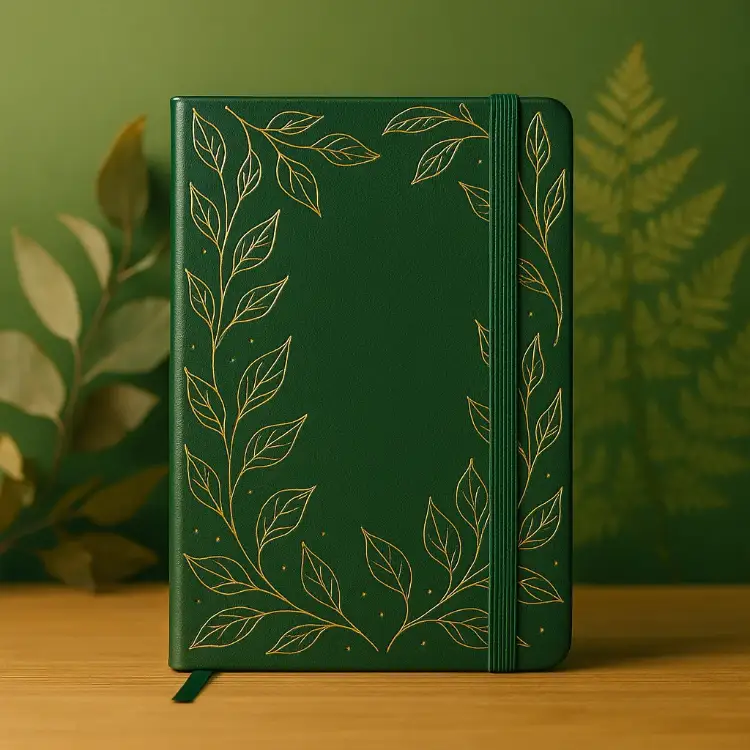
Binding determines how the page block behaves. A sewn or glued book, coil book, and flexible journal have different limits and opening characteristics. Confirm grain direction, inner margin, spine width, and cover fit on the physical sample. The “Verdant Whispers” Premium Journal is an official product reference for discussing a premium journal direction, but a new project’s page count and paper still need separate approval.
Use-Case Page Planning
A page map makes the number meaningful. List the opening pages, repeated templates, dividers, notes, reference content, and closing pages in order. Confirm whether blank backs count and whether each repeated section starts on a right-hand page.
For a guided journal, calculate the repeated program first. Twelve monthly sections with several pages each can consume the book quickly. Add an index, ownership page, instructions, and notes only after the core routine has enough room.
Build the count in a simple page-budget table. Give each unique opening or closing section a fixed allowance, multiply each repeating template by the number of sessions, and reserve only a defined amount for notes. Then round the result to a page count that works with the proposed binding and production format. The supplier should confirm the feasible final count rather than the buyer assuming that any total can be bound efficiently.
Prototype the routine before locking the number. Print one complete week, lesson, meeting cycle, or prompt sequence at full size and ask representative users to fill it in. They may need more writing space than the designer expected, or they may leave half of each spread unused. Adjusting the template can solve the capacity problem more effectively than simply adding pages.
Also check navigation. Section openers, tabs, contents pages, page numbers, and repeated headers consume space but can make a longer journal easier to use. Decide whether a new section must begin on a right-hand page, because that rule may require intentional blanks. Those blanks belong in the page map and quote even though they do not carry printed content.
For a plain journal, the calculation is simpler but the user behavior still matters. A writer who fills one page a day needs a different product from someone who records a weekly reflection. Retail descriptions should communicate the expected format without promising a duration that the layout cannot support.
Undated journals provide flexibility because users can skip days without wasting printed dates. Dated products create a clear program but require exact calendar planning and can become obsolete. If the journal is tied to a course, challenge, or onboarding sequence, count the actual sessions and add a modest notes allowance rather than doubling the book without a use case.
Retail ranges can use page count to separate products. A compact entry journal may suit travel or short projects, while a thicker desk journal can support longer routines. Keep size, paper, and binding differences clear so customers see a meaningful choice instead of two products distinguished only by a larger number.
For branded gifts, reserve space for a company message without turning every spread into an advertisement. A title page, short introduction, or subtle footer can establish the brand while leaving most of the journal useful to the recipient.
Sampling and Specification Checks
Start with a folded paper dummy or blank mockup at the intended size, paper thickness, and page count. It reveals the spine width, weight, opening feel, and package fit before full printing. Then move to a printed sample for color, ruling, registration, and writing tests.
Check the first, middle, and final spreads. Make sure repeated templates appear in the correct sequence and that no content disappears into the binding. Count the pages against the approved page map. If the cover uses a spine title or centered artwork, compare it with the actual spine after binding.
Weigh and measure the finished sample, then record closed size, spine width, and packed dimensions. These values support carton planning and help buyers compare a later production sample with the approved reference. If the journal includes an elastic, ribbon, pocket, or pen loop, check that the thicker page block does not distort those features.
Use a sign-off sheet that separates content approval from construction approval. A correct page sequence can still be bound poorly, and a well-made book can still contain duplicated or missing templates. Assign responsibility for proofreading, page-map checking, writing tests, cover color, and package fit before the bulk order is released.
Packaging must be tested with the finished journal, not an early dummy of another thickness. A small increase in the page block can make a sleeve too tight or change how a book sits in a gift box. Labon’s production process offers useful context for the sampling and production conversation.
Develop a Custom Journal With Labon
Labon Stationery was established in 2003 and specializes in paper notebooks and related paper products. Its range includes journals, diaries, planners, office notebooks, student notebooks, hard notebooks, soft notebooks, coil books, gift boxes, and gift sets.
Labon supports customized production, OEM, and ODM. Its listed paper directions include conventional wood pulp, stone, coated, watercolor, and cotton paper. Its cover materials include PU, linen, coated paper, and leatherate paper. Buyers should confirm which combination fits the required page count, writing tool, binding, and price target.
Labon applies quality control from raw materials through final production. For a page-count project, buyers should turn those controls into measurable approvals: correct paper, correct page number and sequence, stable printing, secure binding, finished dimensions, and package fit. For a page-count project, buyers can translate that general process into measurable approvals: correct paper, correct number and sequence of pages, stable printing, secure binding, finished dimensions, and package fit. Keep the signed sample and page map as the reference for production inspection.
Labon’s ordering guidance normally begins with a sample order and recommends a larger order after sample confirmation. Review the journal and notebook portfolio, then send the finished size, page count, sheet count basis, page map, paper, binding, cover, artwork, packaging, quantity, and destination through the Labon contact page.
Conclusion
The right journal page count is the number that completes the intended routine while keeping the book comfortable to carry, open, and package. Calculate entries first, add front and back matter, match the result to paper and binding, and verify the finished thickness with a physical sample. That process produces a more useful journal than choosing a page number because it sounds generous.
FAQ
Is 120 Pages Enough for a Journal?
It can be enough for a short program, meeting book, travel journal, or occasional writing, but the intended frequency and layout should decide the answer.
What Is the Difference Between Pages and Sheets?
A sheet has two sides, while a page normally means one side, so buyers should state both terms clearly when confirming a quotation.
Does More Journal Pages Mean Better Quality?
No, quality also depends on paper, binding, printing, cover construction, layout, and whether the page count suits the user’s purpose.
How Does Paper Weight Affect Journal Page Count?
Heavier paper generally makes the same number of pages thicker and heavier, which can change the spine, cover, package, and shipping weight.
Can a Custom Journal Mix Different Page Layouts?
Yes, a custom journal can combine prompts, ruled pages, grids, blank pages, indexes, and reference sections when the page map is approved before production.